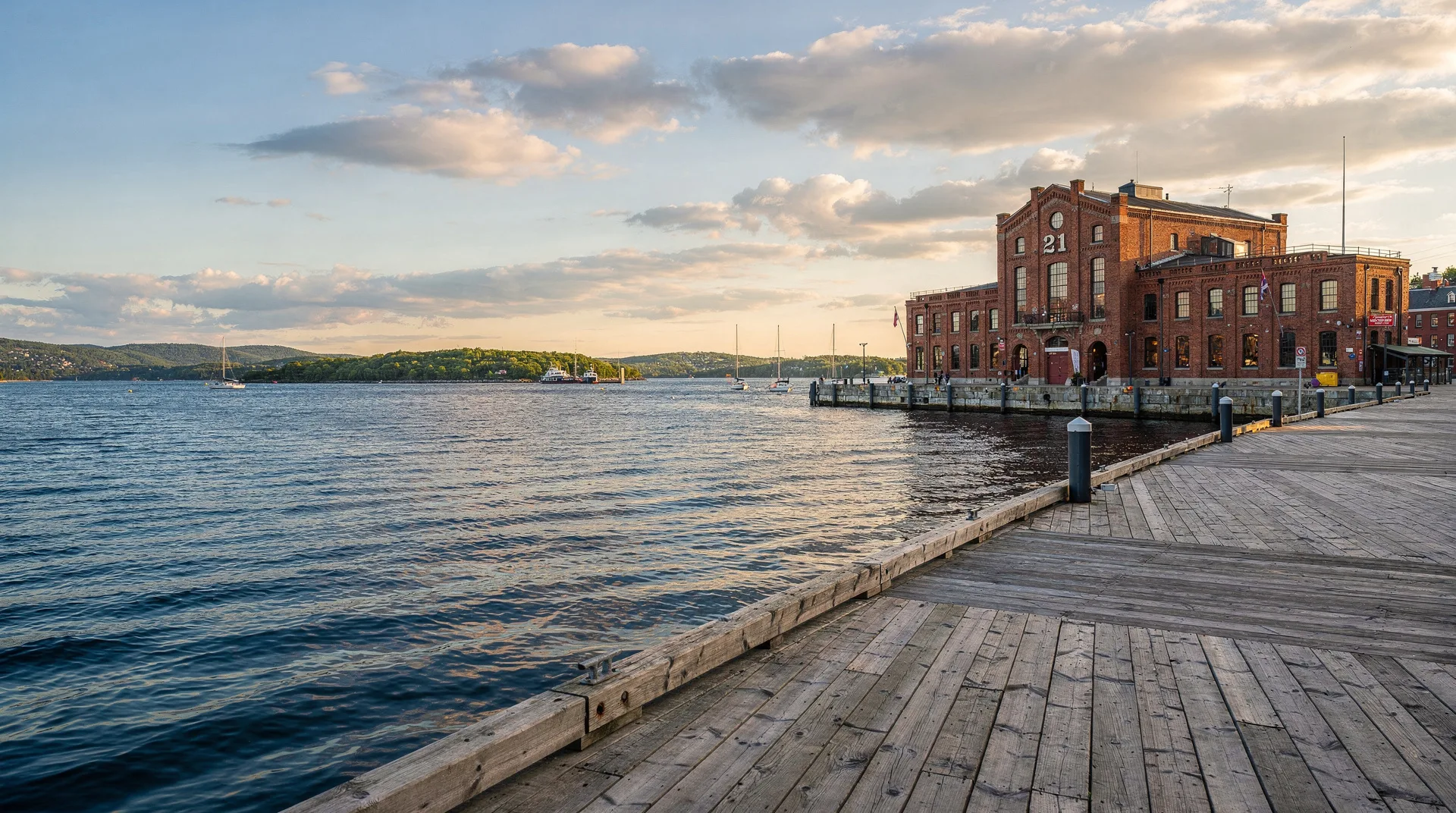
Between 1928 and 1971, more than one million people entered Canada through the gates of Pier 21 on the Halifax waterfront. Jewish refugees fleeing Nazi Germany. Postwar displaced persons from Poland, Ukraine, the Baltic states, and the Netherlands. War brides following their Canadian husbands home. Commonwealth immigrants from the Caribbean, South Asia, and East Africa. The children evacuated from Britain during the Blitz. Tens of thousands of Canadian soldiers returning from the Second World War.
For most of them, the corrugated metal shed at the end of a Halifax pier was their first sight of Canada — the place where they queued for medical inspection, answered questions from immigration officers, ate their first meal on Canadian soil, and stepped through a final set of doors into whatever life was waiting for them on the other side.
The Canadian Museum of Immigration at Pier 21 now occupies that same building, restored to something close to its 1928 appearance. It is one of the most moving museum experiences in Canada.
| At a glance | |
|---|---|
| Where | Halifax waterfront, north end near the Seaport Farmers’ Market |
| Cost | Around $14 standard adult admission; discounts for seniors and students, free under 6 |
| Time needed | Around 2 hours for the main exhibition; add an hour if using the record search |
| Getting there | Easy walk from downtown Halifax hotels along the waterfront boardwalk |
| Best time | Open year-round Tuesday to Sunday; visit on a weekday morning to avoid cruise-ship crowds |
Planning a visit around cruise ship days
Halifax is a major Atlantic Canada cruise port, and Pier 21 sits close enough to the terminal that it gets noticeably busier on days when a large ship is in. If your visit dates are flexible, a weekday morning is the quietest option. If you’re arriving by cruise yourself, expect the museum to be more crowded in the first hour or two after disembarkation — the record search area in particular can have a short wait.
Making the most of the record search
If you plan to search for a specific relative, do a little preparation before you arrive: the surname, approximate arrival year, and country of departure speed up the search considerably. Museum research staff can help, but during peak summer hours they’re often assisting several visitors at once, so arriving early in the day gives you more of their attention. Bringing any family documents — old letters, a remembered ship name — can turn a general search into a specific, successful one.
Pier 21 is formally a National Historic Site, and its designation gives a sense of its significance. From 1928 until its closure as an immigration facility in 1971, it processed arrivals across one of the most dramatic periods in Canadian immigration history.
The 1930s brought desperate refugees — Jews fleeing Hitler’s Germany among them, though Canada’s immigration policy of that era was shamefully restrictive and turned many away. The early 1940s brought British evacuee children, sent across the Atlantic to escape the Blitz. The late 1940s and 1950s were the high-water mark of the pier’s use: tens of thousands of European war refugees, Displaced Persons (DPs), and immigrants from Commonwealth countries arrived each year.
By 1971, when Halifax’s seaport handled its last significant immigrant ship, most immigration had shifted to airports. Pier 21 was subsequently used for various commercial purposes before its designation as a National Historic Site in 1997 and its opening as a museum in 1999.
The Canadian Museum of Immigration
The museum opened in its current enhanced form in 2010, having been designated Canada’s sixth national museum. The building has been thoughtfully restored: the original corrugated iron exterior is preserved, the interior has been carefully redesigned to serve both as exhibition space and as a place of research and record.
The immigration hall
The reconstructed immigration hall is the museum’s central experience. The space has been restored to approximate its 1940s-1950s configuration — the queuing area, the registry counters, the waiting benches — and populated with interpreted recreations of the arrival experience.
Audio testimonials from actual immigrants (the museum has collected hundreds) play at different stations within the hall. You hear voices describing the smell of the hall, the cold, the anxiety about the medical inspection, the relief of passing through. The cumulative effect of standing in the actual space where these arrivals happened, listening to voices of people who were there, is substantial.
Record search and personal connections
One of the museum’s most distinctive offerings is its immigration records database. Visitors can search the database by name, country of origin, or arrival year to find records of specific immigrants who came through Pier 21. The database contains hundreds of thousands of records.
For visitors with Canadian family histories from the mid-20th century — which includes a significant proportion of current Canadian citizens whose parents or grandparents arrived in postwar years — the record search is often personally significant. Finding a grandparent’s name in the records, seeing the ship they arrived on and the date they stepped onto Canadian soil, is a meaningful encounter with family history.
Research staff at the museum can assist with more complex searches. If you know a relative came through Halifax, allow extra time for the research component.
The Gateway City exhibition
The main permanent exhibition covers four themes: Halifax as the gateway city, the immigrant experience at Pier 21 itself, the stories of the people who came through, and Canada’s evolving immigration policy from the restrictive 1920s to the points-based system introduced in the 1960s.
The exhibition doesn’t avoid difficult history. Canada’s wartime policy of refusing Jewish refugees — at a time when those refugees were being sent to their deaths — is addressed directly and honestly. The postwar DPs program, the 1962 reforms removing racial categories from immigration policy, and the 1967 points system that transformed Canadian society are all covered with appropriate context.
Children’s gallery: the suitcase room
For families with children, the museum has designed a dedicated gallery built around the question of what you would pack if you were leaving your home forever and could only bring one suitcase. Interactive elements allow children to make that choice and understand the immigrant experience from a child’s perspective. The gallery works well for ages 8-14.
Temporary exhibitions
The museum runs a rotating programme of temporary exhibitions on specific immigration stories, communities, or periods. Past exhibitions have covered the Italian immigrant experience, Ukrainian settlers on the Prairies, the experience of Black Canadians in the postwar period, and more recent refugee communities. Check the museum’s current schedule before visiting.
Practical information
Hours: The museum is open Tuesday to Sunday, year-round. Summer hours (June through October) are typically 9:30am to 5:30pm; winter hours are reduced. Check current hours before visiting.
Admission: Standard adult admission is around $14; seniors and students receive discounts; children under 6 are free. The record search and general browsing of the research centre are included in admission.
Time needed: Allow 2 hours minimum for the main exhibition and immigration hall. Add another hour if you plan to use the record search seriously. The museum café serves lunch and light refreshments.
Location: Pier 21 is at the northern end of the Halifax waterfront, within easy walking distance of the Maritime Museum of the Atlantic, the Seaport Farmers’ Market, and the main waterfront boardwalk. It is a natural conclusion to a waterfront walk heading north from Historic Properties.
Connecting Pier 21 to Halifax’s other history
Pier 21’s immigration story connects to Halifax’s broader role as a point of arrival, departure, and tragedy for generations. The city’s Titanic connection — 150+ victims buried in three Halifax cemeteries — is another expression of the harbour’s role as the place where the Atlantic delivered both promise and loss. The Naval Museum, the Explosion memorial at Fort Needham, and the Black Loyalist heritage sites in nearby areas complete a picture of Halifax as a city shaped by the sea’s constant traffic of people.
For visitors with Jewish heritage, particularly families tracing European relatives who came to Canada in the 1930s-1950s, Pier 21 is likely the most personally significant site in Halifax. For all visitors, it provides the most direct encounter with the human experience of immigration that any Canadian museum offers.
The Halifax waterfront walk naturally combines Pier 21 with the Maritime Museum of the Atlantic (which covers Titanic history in detail), the Alexander Keith’s Brewery (a different Halifax heritage story), and the Historic Properties precinct. Budget a full morning for the museum cluster, lunch at the Seaport Market, and an afternoon at Citadel Hill.
Book Halifax heritage tours including the waterfront history walkPier 21’s significance for international visitors
Non-Canadian visitors sometimes wonder whether an immigration museum primarily about Canadian immigration history is relevant to them. The answer is almost universally yes.
Many international visitors to Canada have ancestors who emigrated — not necessarily to Canada — and the Pier 21 experience illuminates the universal immigrant experience with a specificity and honesty that most national immigration museums avoid. The voices in the testimonials, the suitcase packed with everything you have, the medical inspection that determines whether you’re admitted or sent back: these experiences resonate regardless of one’s own family history.
For American visitors, the connections are often direct — many Canadian immigrants came through Pier 21 and subsequently moved to the United States. For European visitors, the postwar immigration story in particular resonates: the Displaced Persons camps, the choice between staying in a devastated Europe or starting over in the New World, the ocean crossing as an act of enormous hope and terror simultaneously.
For a broader Atlantic Canada context, Pier 21 pairs naturally with the Acadian heritage sites, the Mi’kmaw cultural sites, and the Loyalist heritage of Saint John as part of a layered understanding of how Atlantic Canada was populated, depopulated, and repopulated across 400 years of European colonial history.
Explore all Nova Scotia heritage and cultural experiencesFrequently asked questions
Can I search for a specific relative at Pier 21? Yes. The museum’s immigration records database is searchable by name, arrival year and country of origin, and research staff can assist with more complex searches — allow extra time if you plan to dig deep.
Is Pier 21 worth visiting if I have no Canadian family history? Yes. The museum tells a universal immigration story through testimonials and interactive exhibits, and it’s consistently rated one of Halifax’s most moving museum experiences regardless of personal connection.