Quick facts
- Located in
- Sea-to-Sky Corridor
- Best time
- Late July to September (trails snow-free)
- Getting there
- 1-1.5 hrs north of Vancouver on Hwy 99; 30 min south of Whistler
- Days needed
- 1-5 days (day hike to multi-day backpacking)
| At a glance | |
|---|---|
| Where | Sea-to-Sky Corridor, between Squamish and Whistler, BC |
| Cost | Day-use and camping fees apply, plus a separate parking reservation fee on peak summer weekends; no national-park pass accepted |
| Time needed | 1 day for Garibaldi Lake, up to 5 days for a multi-day backpacking loop |
| Getting there | 1-1.5 hrs north of Vancouver on Highway 99; 30 min south of Whistler |
| Best time | Late July to September, when trails are snow-free and wildflowers peak |
Garibaldi Provincial Park occupies 97,000 hectares of volcanic peaks, alpine lakes, glaciers, and old-growth forest in the Coast Mountains immediately north of Vancouver, accessible from the Sea-to-Sky Highway (Highway 99) between Squamish and Whistler. It is British Columbia’s most-visited provincial park for good reason: the landscape is extraordinary — turquoise glacial lakes beneath volcanic rock walls, subalpine meadows carpeted with wildflowers, and the iconic silhouette of the Black Tusk rising 600 metres above the surrounding plateau — and it sits within two hours of Canada’s third-largest metropolitan area.
The park’s defining geological feature is its volcanic origin. Mount Garibaldi (2,678 metres) and the Black Tusk (2,319 metres) are the most visible products of the Garibaldi Volcanic Belt — a chain of volcanoes associated with the Cascades arc extending from northern California through Washington into southern BC. The Black Tusk is the eroded remnant of a volcanic plug, its distinctive shape resulting from glacier carving of the original cone. Lava flows and volcanic cinder deposits visible throughout the park record activity extending to within the past 10,000 years.
Garibaldi Lake and Taylor Meadows
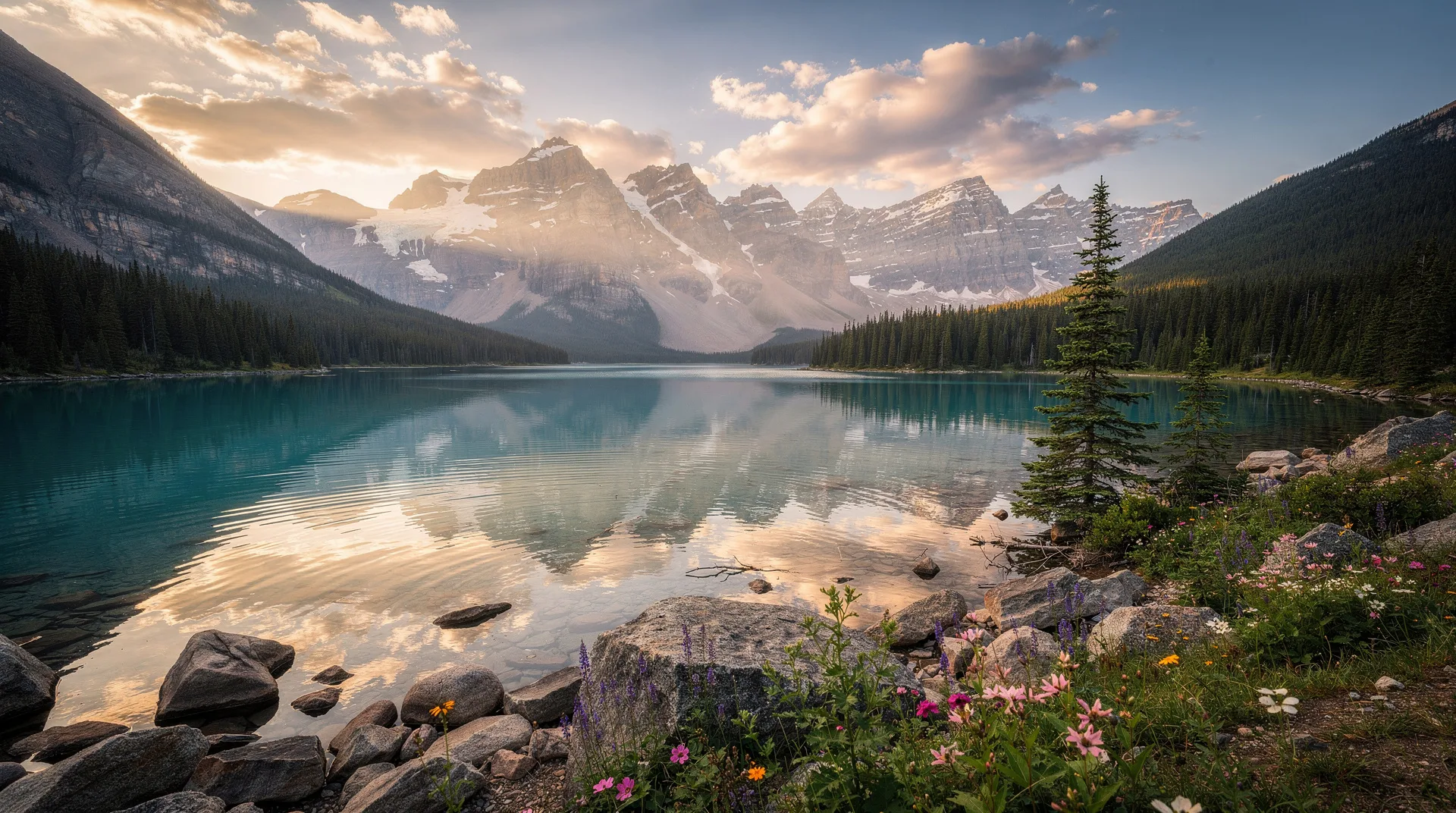
Garibaldi Lake is the park’s most iconic destination — a glacially-fed lake of improbable turquoise colour at 1,470 metres elevation, ringed by the glaciated walls of the Garibaldi Massif and overlooked by the Black Tusk. The colour results from glacial flour — finely ground rock particles suspended in meltwater — reflecting the blue-green spectrum of visible light. On a clear day in late summer, the lake surface is the most saturated colour in the BC landscape.
The trail begins at the Rubble Creek trailhead off Highway 99 near Daisy Lake and climbs 820 metres over approximately 9 kilometres — a demanding day hike (18 km return, allow 6-8 hours) but entirely achievable for fit hikers in good footwear. The trail passes through old-growth forest for the first half, emerges at the Taylor Meadows subalpine zone, and reaches the lake above the Barrier — a lava dam that created the lake by blocking the valley.
Taylor Meadows, 1 kilometre before the lake, is an alternative camping zone with meadow campsites and views to the Black Tusk. The meadows are carpeted with lupine and paintbrush from late July through August. Both the Garibaldi Lake and Taylor Meadows campgrounds require advance reservations through BC Parks — among the most competitive camping reservations in Western Canada, typically selling out within minutes of opening each spring.
Browse guided Garibaldi Park hikes and Sea-to-Sky adventures from VancouverBlack Tusk
The Black Tusk scramble is the park’s most dramatic single achievement — a Class 3 scramble to the summit of the volcanic plug at 2,319 metres. From Garibaldi Lake or Taylor Meadows, the trail climbs through meadows and scree to the base of the Tusk, then ascends a steep rocky chimney and exposed ridge to the summit. The final section requires use of hands on solid rock — not technical climbing, but well beyond straightforward hiking. Scrambling experience, good footwear, and a head for heights are required.
From the summit, the panorama extends from Mount Garibaldi and the Tantalus Range to the west, south across the Fraser Valley to the Gulf Islands, north to the Spearhead Range above Whistler, and east across the Squamish River watershed. On clear days the view is among the most comprehensive in all of coastal BC. The Black Tusk as seen from below — its distinctive dark spire rising cleanly above the surrounding plateau — is one of the most photographed mountain features in BC.
Allow a full day from the Rubble Creek trailhead for the Black Tusk return, with a very early start recommended to clear the summit before afternoon weather builds. The scramble from the lake is safe in dry conditions but dangerous when wet; check forecasts carefully.
Panorama Ridge
Panorama Ridge, above and west of Garibaldi Lake, is accessed from the lake campground via a 3-4 hour uphill approach. The ridge at 2,130 metres provides one of the definitive views in BC: Garibaldi Lake below, the Black Tusk opposite, the Garibaldi Massif glaciers filling the horizon, and the Tantalus Range visible to the south. It is not technically difficult, but the elevation gain from the lake makes it a full-day outing from a lake-level base camp.
The ridge is best experienced in the golden hour before and after sunset, when the light on the lake surface shifts through amber and the Black Tusk catches the last direct sun. A two-night base at Garibaldi Lake allows a leisurely Panorama Ridge day without the time pressure of a single-day return from the highway.
Elfin Lakes and Diamond Head
The Diamond Head section of Garibaldi Park, accessed from the Mamquam Forest Service Road east of Squamish, is a separate area from the Garibaldi Lake zone — less visited and in many ways equally dramatic. The trail climbs 760 metres over 11 kilometres to the Elfin Lakes shelter (operated by BC Parks year-round), perched on the rim of the volcanic Garibaldi massif with views across the Opal Cone — a cinder cone formed approximately 10,000 years ago — and the Red Heather Meadows.
The Elfin Lakes zone is exceptional for snowshoeing in winter — one of the most popular winter backcountry destinations within day-trip range of Vancouver. In summer, the continuation from Elfin Lakes to the Gargoyles (dramatic volcanic rock formations at the icefield edge) is a full-day extension reaching terrain as wild as anything accessible within 90 minutes of Vancouver.
Explore guided hiking and alpine tours in Garibaldi Park from WhistlerSinging Pass and the Cheakamus connector
The Singing Pass route accesses Garibaldi Park from the Whistler side via the Whistler mountain trail network — a full-day ridgewalk traversing the Fitzsimmons Range and descending through Singing Pass to the Cheakamus Lake zone. The route requires point-to-point transportation and a full summer day, but represents one of the great ridgewalk experiences in the Sea-to-Sky corridor.
Cheakamus Lake, at the south end of the park near Whistler, is a lower-elevation option — a 4-kilometre trail through old-growth forest to a long, clear lake backed by hanging glaciers. It is one of the few Garibaldi Park destinations accessible in shoulder season when the higher alpine trails remain snow-covered, and the easiest significant lake walk in the park for families or less experienced hikers.
Wildlife and park ecology
Garibaldi’s wildlife reflects the transition between coastal and mountain ecosystems. Black bears are present throughout the park — the high berry production in the subalpine meadows in August attracts them in numbers, and encounter-preparation (noise, bear spray, food storage in hanging caches or bear canisters) is standard practice. Marmots are abundant in the rocky alpine terrain above Garibaldi Lake and at Elfin Lakes, their whistled alarm calls announcing hikers from a distance.
The park’s bird life includes white-tailed ptarmigan in the highest alpine terrain, Clark’s nutcracker in the subalpine, and the ubiquitous grey jay (Canada jay) that gravitates to lunch stops with cheerful opportunism. The Cheakamus Lake area supports a breeding population of common loons. Wolverines and mountain goats occupy the high remote terrain but are rarely encountered by hikers on the main trails.
Practical information
Getting there: Garibaldi Park has five entry points off the Sea-to-Sky Highway. The most used are the Rubble Creek trailhead (for Garibaldi Lake and Black Tusk, exit at Garibaldi/Squamish Valley Road turnoff near Daisy Lake) and the Diamond Head trailhead (for Elfin Lakes, via Mamquam Forest Service Road off Highway 99 at Squamish). Both require driving 20-30 minutes on forestry roads. Highway 99 between Vancouver and the park turnoffs is one of the most scenic drives in BC.
Parking and reservations: Trailhead parking lots fill by 8 am on summer weekends — arrive early or reserve a spot through BC Parks’ day-use parking reservation system, which is mandatory on peak summer weekends. Camping reservations are required and highly competitive; check the BC Parks reservation system starting in March for summer dates.
What to bring: The alpine terrain in Garibaldi is exposed and weather can change rapidly. Rain gear, extra layers, and a map (or downloaded offline map) are essential. The trails to Garibaldi Lake and Black Tusk have significant elevation gain — proper hiking footwear is non-negotiable. A bear canister or hang bag is required for overnight camping.
Park fees: Day use and camping fees apply. The parking reservation system charges a separate fee. BC Parks National Park equivalent passes are not applicable — Garibaldi is a provincial park.
Gear, preparation, and safety
Garibaldi is an alpine environment with the hazards that implies, and the proximity to Vancouver means it attracts visitors with widely varying experience levels. A few preparations make the difference between a great day and a dangerous one.
Footwear: Trail runners are acceptable for the Garibaldi Lake hike in dry conditions. The Black Tusk scramble requires genuine hiking boots with ankle support and a sole that grips on wet rock. Do not attempt the Tusk in sandals or casual trainers.
Weather: The Coast Mountains produce weather rapidly. A clear morning can become a cold, wet, low-visibility afternoon with little warning. Pack a rain jacket, an insulating layer, and enough food and water for a longer day than planned. The standard recommendation is to start the Black Tusk early — on the descent by 1 pm — to avoid afternoon thunderstorms that build over the volcanic terrain in summer.
Navigation: The main trails to Garibaldi Lake and Taylor Meadows are well-signed and hard to lose in clear weather. The routes to Panorama Ridge and the Black Tusk from the lake require more attention to navigation in poor visibility. Download the AllTrails map or BC Parks trail map offline before leaving cell service range (which ends approximately at the highway).
Bears: Black bears are common in the park — particularly in the berry-rich subalpine terrain in August. Make noise on the trail, carry bear spray accessible (not in the pack), and store food in designated bear boxes at the campgrounds. The park’s proximity to the Lower Mainland means bears are accustomed to human presence and generally non-confrontational, but encounters are possible.
Permits and day-use reservations: The BC Parks reservation system now requires day-use parking reservations at the Rubble Creek trailhead on peak summer weekends (Friday through Sunday, July and August). These reservations are available through the BC Parks website and are strongly recommended. Camping permits require a separate reservation — the Garibaldi Lake and Taylor Meadows sites release on a specific date in spring and sell out within minutes.
Day trips and connections
Whistler is 30 minutes north of the park’s main trailheads — easily combined with a Garibaldi hike on a two-day trip from Vancouver. Squamish — with the Sea-to-Sky Gondola, Stawamus Chief climbing, and Shannon Falls — is 15 minutes south of the Rubble Creek trailhead and provides a compelling half-day extension.
The Sea-to-Sky Gondola at Squamish (tickets required) provides a different relationship with the coastal mountain landscape — a 10-minute gondola ascent to a viewing platform and trail network above the Howe Sound fjord, without the hiking commitment of Garibaldi. It is a practical addition to a Garibaldi day for parties with mixed fitness levels or families with younger children who cannot manage the full Garibaldi approach.
The full Sea-to-Sky corridor — Vancouver, Squamish, Garibaldi Park, Whistler, Pemberton — is one of the most compelling one-way drives in Canada. The 160-kilometre route from the city through the fjord, past granite walls and hanging glaciers, to the alpine resort town of Whistler is the context within which Garibaldi exists: a wilderness park in the middle of one of North America’s great adventure landscapes.
Building Garibaldi into a wider trip
Few visitors come to Garibaldi in isolation, and the park slots naturally into several trip shapes. For a detailed trail-by-trail breakdown of the main route, the Garibaldi Lake trail guide goes deeper than this overview. If the park is one stop among many alpine outings, the best hikes in British Columbia puts it alongside the other big-name trails so you can judge how much effort to spend where.
On the road side, the Vancouver to Whistler drive follows the same highway that serves every Garibaldi trailhead, so the park can be treated as a stop on the way rather than a separate excursion. A Whistler weekend leaves room for one big hiking day here, and the longer British Columbia 7-day itinerary can fit it between coastal and mountain stops. Anyone still deciding when to travel should read about the best time to visit British Columbia, since snow conditions decide which trails are open.
Rock-climbing and scrambling fans often pair the park with the Stawamus Chief hike at Squamish, a shorter but steep outing that works well as a warm-up or a rest-day alternative. After several days of hard walking, the hot springs of British Columbia offer a gentler way to recover. Read the Canada wildlife safety guide before heading out, because the bear advice above applies on every trail in the region, and the Canadian camping rules cover the habits that keep campsites clean and animals wild.
Choosing which section of the park to hike
Garibaldi Park is large enough that first-time visitors often need help picking a zone rather than a trail. The choice mostly comes down to time available and appetite for elevation gain:
| Zone | Access point | Best for | Difficulty |
|---|---|---|---|
| Garibaldi Lake / Black Tusk | Rubble Creek trailhead | The classic turquoise-lake photo, the Black Tusk scramble | Demanding day hike or overnight |
| Panorama Ridge | Via Garibaldi Lake campground | The single best viewpoint in the park | Full day from a lake-level base |
| Elfin Lakes / Diamond Head | Mamquam Forest Service Road, Squamish | Less crowded alpine scenery, winter snowshoeing | Moderate day hike |
| Cheakamus Lake | Whistler side | Families, shoulder-season access | Easy, low elevation |
Visitors with only a single day and a car should default to Garibaldi Lake; those willing to camp should prioritize a Garibaldi Lake or Taylor Meadows base with a Panorama Ridge day from there, since it delivers the park’s most complete view for a single push.
Comparing Garibaldi to other Sea-to-Sky hikes
Against other alpine options in the corridor, Garibaldi stands out for scenery-to-effort ratio but not for ease of access. The Sea-to-Sky Gondola at Squamish delivers alpine views with almost no hiking, which makes it the better choice for parties with limited fitness or time. Garibaldi rewards those willing to put in a genuine 800-metre-plus climb, and it remains the more memorable destination for anyone comparing the two on a single Vancouver-to-Whistler trip.
Frequently asked questions about Garibaldi Provincial Park
When do the Garibaldi Lake trails open each year?
The Rubble Creek trail to Garibaldi Lake is snow-free and fully hikeable from approximately late June to mid-October in most years. The Black Tusk scramble and Panorama Ridge are typically snow-free by mid-July. The Elfin Lakes trail is accessible earlier in spring and later in autumn — it is the park’s most year-round accessible zone. Check BC Parks trail condition reports before departing.
How difficult is the hike to Garibaldi Lake?
The Garibaldi Lake hike is rated difficult due to the 820-metre elevation gain over 9 kilometres (18 km return). The trail itself is well-maintained with no technical sections. Fit hikers complete it in 5-6 hours return; average hikers should allow 7-8 hours. The difficulty is in the sustained uphill — take sufficient water, food, and rest breaks, and start early.
Can I visit Garibaldi Park without camping?
Yes. The main destinations — Garibaldi Lake, Taylor Meadows, the Black Tusk viewpoint, and Elfin Lakes — are all reachable as day hikes. A day visit to Garibaldi Lake is a long day (18 km, 820 m gain) but very popular and feasible for fit day hikers. Camping significantly expands the experience — Panorama Ridge at sunset and the morning light on the lake require an overnight base.
Is it safe to drink the water from Garibaldi Lake?
BC Parks recommends treating or filtering all backcountry water, including glacial lake water, before drinking. Giardia is present in BC’s backcountry water sources. A filter, UV pen, or chemical treatment is standard equipment for multi-day trips.
Do I need a reservation to hike Garibaldi Provincial Park?
A day-use parking reservation is required at the Rubble Creek trailhead on peak summer weekends (Friday through Sunday in July and August), bookable through the BC Parks website. Overnight camping at Garibaldi Lake and Taylor Meadows always requires a separate advance reservation, which typically sells out within minutes of release each spring.