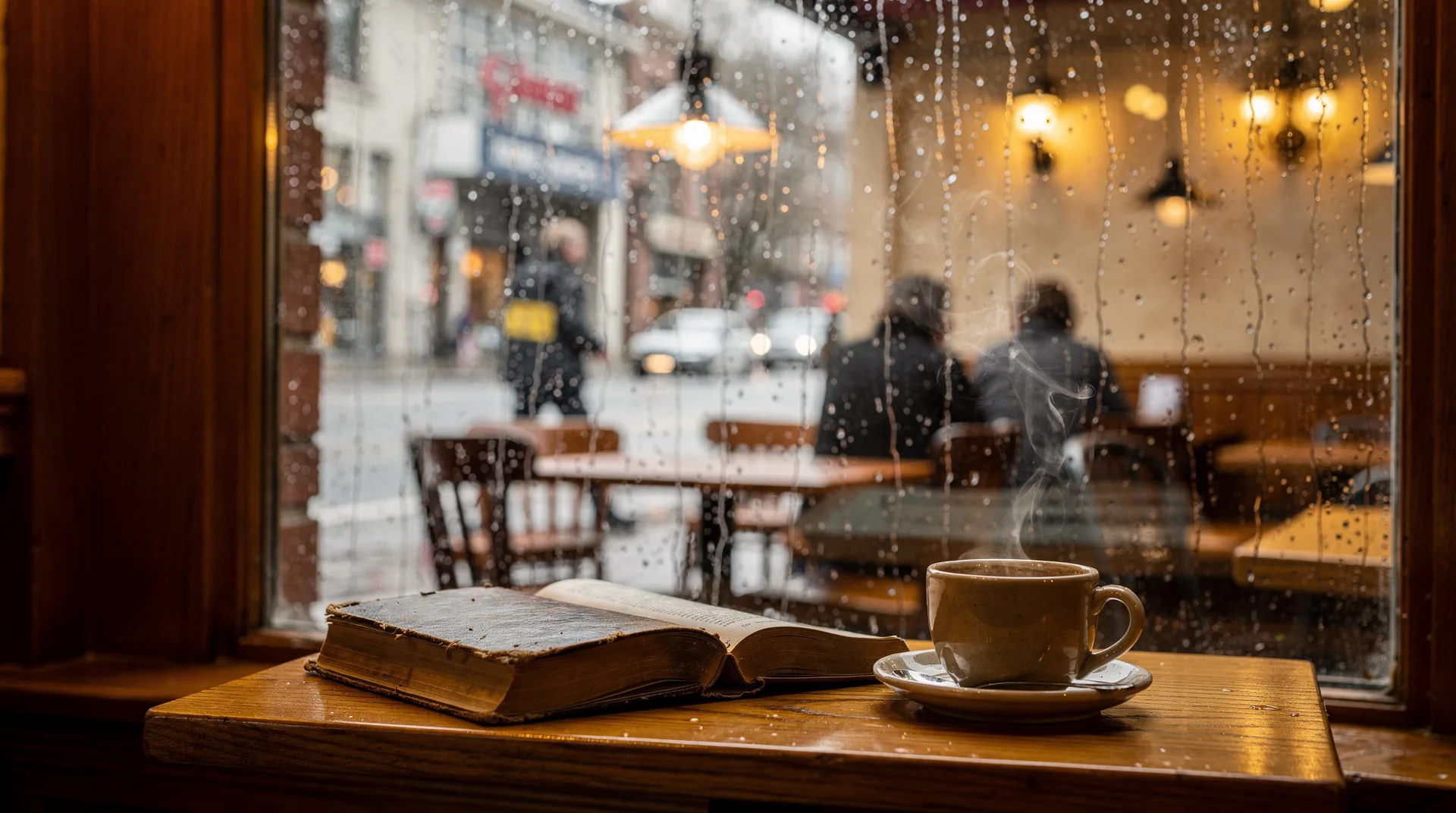
Rainy day activities in Canada
Canada’s weather is a negotiation rather than a guarantee. Vancouver averages 166 rainy days per year. Montreal gets ice storms in winter and thunderstorms in summer. Even the Rockies produce cold rain that shuts down exposed ridgelines on July afternoons. If you’ve planned a trip to Canada around outdoor experiences and a rainy day arrives, the wrong response is to consider the day lost.
The right response is to know the options. Every major Canadian city has indoor culture, food, and experiences that are worth seeking out regardless of weather — and some specifically require rain to be fully appreciated.
| Details | |
|---|---|
| Cities covered | Vancouver, Montreal, Toronto, Quebec City, Halifax |
| Cost | Museums typically around CAD $20-25; markets and underground networks free to walk |
| Time needed | Half a day per major museum; a full day for underground-city hopping |
| Getting around | Transit-friendly in all five cities — a car isn’t needed for a rainy-day plan |
| Best months to expect rain | October-March on the west coast; year-round chance elsewhere |
Vancouver: a city built for rain
Vancouver’s residents have a particular relationship with rain — 1,154 mm annually, mostly between October and March — that has produced a sophisticated indoor culture. The locals don’t own umbrellas (they have rain jackets), and they know exactly where to be when the Pacific system moves in.
The Museum of Anthropology at UBC is one of Canada’s outstanding museums regardless of weather. The Great Hall’s collection of Pacific Northwest Indigenous art — totem poles, bentwood boxes, canoes, and masks representing Haida, Musqueam, Squamish, and other nations — is housed in Arthur Erickson’s glass-and-concrete building with forest and ocean views on three sides. Even in rain, the building’s relationship with its landscape is beautiful. Half a day minimum; worth a full day for anyone seriously interested in Indigenous art.
The Vancouver Aquarium in Stanley Park is particularly good on a cold, grey day when the contrast between the wet outside and the warm, strange underwater world inside feels especially sharp. The beluga habitat, the Pacific Northwest section with sea otters and giant Pacific octopus, and the Amazon gallery provide about three hours of genuinely excellent aquarium experience.
Granville Island Public Market is covered and fully operational in any weather. The market building houses vegetable vendors, artisan food producers, bakeries, fishmongers, and ready-to-eat options at a quality level that makes it one of Canada’s best food markets. The surrounding arts community — galleries, craft shops, theatre spaces — extends the visit well beyond the market itself.
The food scene in Vancouver is extraordinary by any standard — the concentration of excellent Japanese, Chinese, Korean, South Asian, and Pacific Northwest restaurants within the city means a rainy day is a perfectly good excuse to do nothing but eat well. Richmond’s Golden Village (20 minutes south by SkyTrain) for dim sum on a Sunday morning in the rain is about as comfortable as Canadian indoor travel gets.
Montreal: the underground city and much more
Montreal’s solution to winter is architectural: the RÉSO, commonly called the “underground city,” is a 33 km network of tunnels connecting metro stations, hotels, shopping centres, universities, museums, and office buildings across downtown. You can theoretically spend a full rainy (or snowy, or bitterly cold) day in central Montreal without going outside.
The Montreal Museum of Fine Arts is one of Canada’s best art museums — a collection spanning several pavilions that covers everything from Quebecois folk art to Impressionist painting to contemporary installation. The museum is particularly strong on Indigenous and early Canadian art and maintains an active programme of major touring exhibitions. Allow four to five hours or more if the current exhibition is compelling.
Pointe-à-Callière, the Montreal Museum of Archaeology and History, sits on the actual archaeological remains of the original 1642 settlement at the tip of the Old Port. The underground tour through genuine archaeological excavations — foundations, wells, sewer systems — is atmospheric even without rain, but there is something specifically appropriate about being underground in the rain looking at the layers of a city’s history.
The Jean-Talon Market in the Mile End is not covered in the manner of a fully enclosed building, but the vendors and the indoor sections operate year-round. On a cold autumn day, the market becomes a festival of Québec root vegetables, cider, cheese, and the general abundance of fall harvest — one of Canada’s better sensory experiences.
Montreal food tours and cultural experiences often make the best use of rainy days because the format — moving between indoor locations with a guide who knows the context — keeps you engaged and comfortable regardless of what the sky is doing.
Toronto: world-class museums in a walkable core
Toronto’s museum culture is genuinely excellent. The Royal Ontario Museum (ROM) is the country’s largest museum — natural history, world cultures, and Canadian heritage across multiple floors and wings, with the controversial but visually striking Crystal addition by Daniel Libeskind. Budget at least half a day; the range is so broad that shorter visits feel rushed.
The Art Gallery of Ontario (AGO) holds one of Canada’s best art collections, anchored by the Henry Moore Sculpture Centre (the world’s largest public collection of Moore’s work) and strong holdings of Canadian art including the Group of Seven’s core works. The Frank Gehry renovation of the building in 2008 added excellent new gallery spaces. The AGO is in the heart of the city and walkable from most downtown accommodation.
The Distillery District — a restored Victorian industrial complex now housing galleries, restaurants, independent shops, and studios — is excellent in light rain, when the red brick and cobblestones create a moody, atmospheric character that makes the whole place more photogenic. The Christmas Market in December is one of Canada’s best seasonal events.
For pure rainy-day comfort, Toronto has a café culture concentrated in Kensington Market, Little Italy, and Queen West that rewards wandering. A day moving between coffee shops, record stores, and bookshops in these neighbourhoods is a completely valid approach to a wet Toronto afternoon.
Quebec City: old city, stone walls, excellent food
Rain in Quebec City feels almost thematically appropriate — the stone walls of the old city absorb moisture differently from modern surfaces, and the narrow streets of the Lower Town acquire a particular sheen that makes them look like a nineteenth-century European city. This is not objectively unpleasant.
The Musée de la Civilisation in the Lower Town covers Québec’s complex history — Indigenous, French, British, and modern — with considerable intelligence and excellent bilingual interpretation. The Musée National des Beaux-Arts du Québec, in the Plains of Abraham area, holds the largest collection of Quebecois art in existence, in a building that is itself architecturally interesting (a former prison incorporated into the museum complex).
Rue Saint-Jean in the Upper Town is a concentration of cafés, bistros, and wine bars that operates regardless of weather. On a rainy afternoon, sitting in one of the small French-style bistros along this street with a glass of Québec cider and a plate of poutine involves a genuine quality-of-life moment that weather cannot diminish.
Guided tours of Quebec City’s historic sites continue in rain — guides who know the city’s history well make the covered portions (museums, historic interiors) as compelling as any outdoor walk.
Halifax and Atlantic Canada: embrace the maritime atmosphere
Halifax is a maritime city, and maritime cities have a different relationship with weather than landlocked ones. The Halifax waterfront — the Historic Properties, the Seaport Market, the Canadian Museum of Immigration at Pier 21 — functions well in rain because the covered market and indoor attractions are genuinely worth the visit.
Pier 21 is one of Canada’s more moving museum experiences: the entry point for over a million immigrants between 1928 and 1971, now a National Historic Site with records, photographs, and personal testimonies. The connection to the actual place where the documented events happened gives it a weight that replica museums lack.
Alexander Keith’s Brewery on the Halifax waterfront is part-museum, part-theatrical experience — costumed guides lead tours through the historic 1820 brewery in a format that involves more drama and humour than most brewery tours. The beer tasting at the end is genuinely good. About two hours; very appropriate for a rainy afternoon.
Calgary and the Rockies towns: rain at altitude
Rain in the mountains behaves differently — a wet afternoon in Banff or Canmore often means low cloud on the peaks rather than a washout at valley level, and it can clear within hours. Calgary itself has the Plus-15 network of enclosed walkways downtown and the Glenbow-affiliated museum spaces for a properly wet day. In Banff, the Banff Upper Hot Springs are arguably better in the rain than in sun — soaking outdoors while it drizzles is one of the more pleasant ways to wait out a mountain system, and the avoiding crowds in the Rockies guide has more on making a flexible mountain itinerary work around weather.
Practical notes
Most Canadian museums offer reduced rates for evening visits, annual member passes, and regular free admission days (often the first Tuesday of the month or similar). The budget travel guide covers these deals in more detail.
Coffee culture in Canada has evolved significantly beyond Tim Hortons. Every major Canadian city has an excellent independent café scene — Vancouver’s especially, but Toronto, Montreal, and Victoria all have café cultures worth exploring on a slow, wet day.
Canadian winters produce a category of weather — ice storm, blizzard, freezing rain — that is beyond “rainy day” and requires genuine indoor strategy. The underground networks in Montreal, Toronto’s PATH system (30 km of underground walkways in the financial district), and Calgary’s Plus-15 system (elevated enclosed walkways) represent serious winter urbanism that doubles as rainy-day infrastructure.
Final thoughts
The ideal response to a rainy day in Canada is to treat it as a change of register rather than a failure of the trip. The museums are world-class, the food scenes are excellent, and the culture in the major cities rewards time spent indoors as much as any landscape. Some of the most memorable travel days are the ones that were forced into an indoor mode — the accidental discovery of a gallery, the four-hour lunch, the afternoon in a bookshop.
Pack a rain jacket, know your fallback options, and let the weather do its thing.
Frequently asked questions about Rainy day activities in Canada
Is Vancouver really that rainy?
Vancouver’s rainfall is concentrated in fall and winter — from June through September, the city is typically dry and warm. Summer visitors rarely encounter sustained rain. If you’re visiting October through April, however, a rain jacket is non-optional and planning for indoor activities is genuinely useful.
What is Montreal’s underground city exactly?
The RÉSO is a network of underground pedestrian tunnels and above-ground walkways connecting metro stations, hotels, shopping centres, office buildings, universities, museums, and entertainment venues in downtown Montreal. It was developed incrementally from the 1960s onward and now covers about 33 km of connected space. It does not go everywhere — significant parts of the city are not connected — but it covers the core of downtown effectively.
Are Canadian museums expensive?
Prices vary. The ROM in Toronto is approximately CAD $25 for adults (more for special exhibitions). The AGO is similar. The Museum of Anthropology in Vancouver is CAD $23. Most major museums have free days or reduced evening admission. Parks Canada museums in national historic sites are generally less expensive. If you’re visiting multiple museums in one city, check whether a combination pass or membership saves money.
What do Canadians actually do on rainy days?
They go about their lives, largely. Rain is not regarded as exceptional weather in most parts of the country. Coffee shops fill up, indoor markets get busier, restaurants see longer waits. The cultural infrastructure for indoor activity is well developed precisely because Canada’s weather demands it.
Is Calgary’s Plus-15 system worth using on a rainy day?
Yes, if you’re downtown. The elevated enclosed walkway network connects office towers, hotels, and some shopping directly, letting you move around the core without stepping outside. It’s more limited in scope than Montreal’s RÉSO but useful for a short rainy stretch in the city before heading toward Banff.