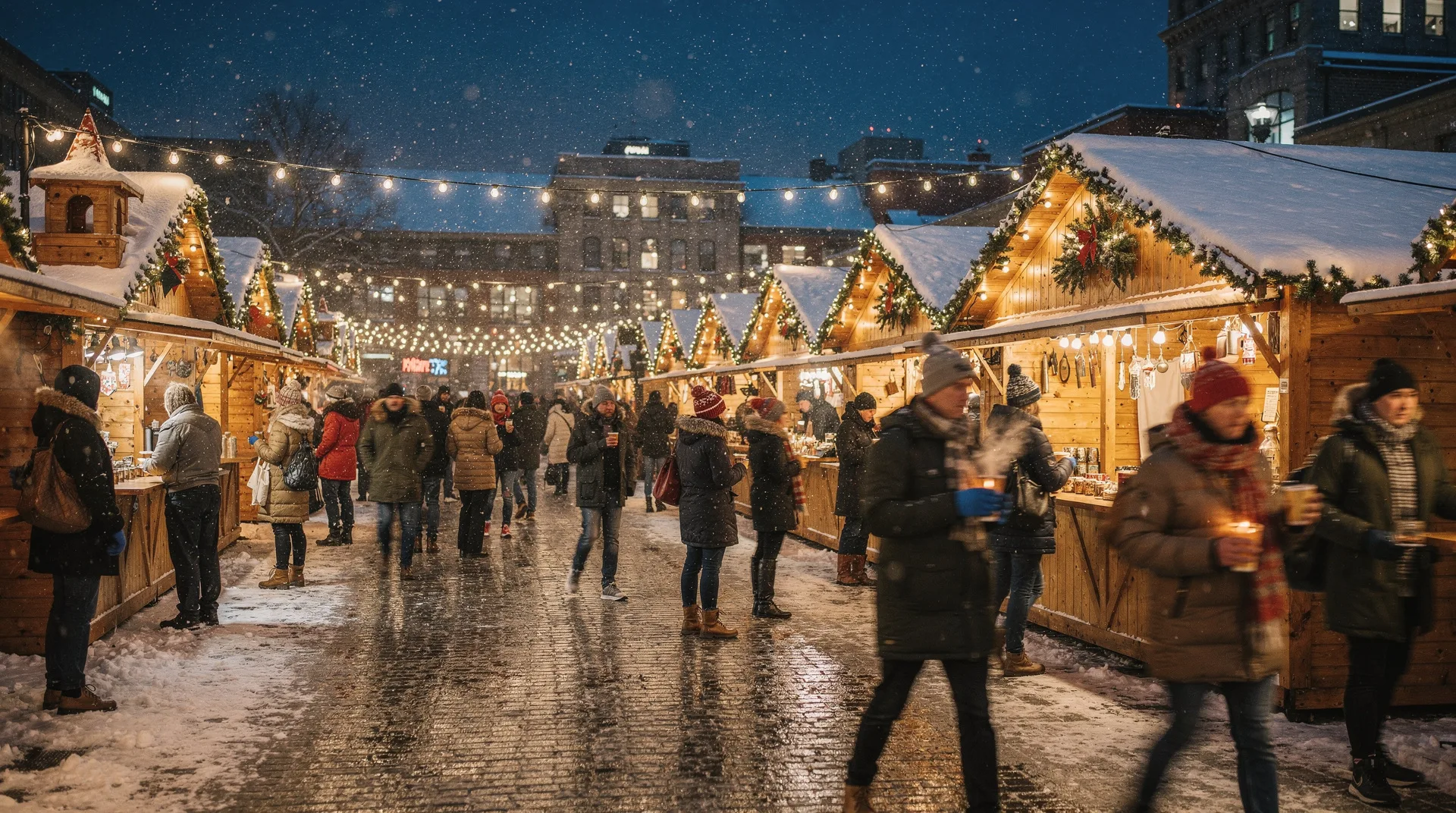
Canadian Christmas markets: a complete guide
Canada’s winter reputation is well-established: cold, dark, buried under snow for months at a stretch. What’s less well-known outside the country is how enthusiastically Canadians embrace that winter through festivals, outdoor markets, and seasonal celebrations that transform the cold months from something to endure into something to seek out.
Christmas markets in Canada have grown significantly over the past decade, shifting from modest craft fairs into genuine seasonal destinations that compete with their European counterparts for atmosphere and quality. Some are frankly still better described as craft fairs with mulled wine. But several have become events worth building a trip around — and the combination of a winter visit to a city like Quebec City or Montreal with an excellent Christmas market experience is one of the most underrated winter travel propositions in North America.
| At a glance | |
|---|---|
| Where | Quebec City, Vancouver, Toronto, Montreal, plus smaller markets in Victoria, Niagara and Banff |
| When | Roughly mid-to-late November through Christmas Eve |
| Cost | Most markets are free to enter; Toronto’s Distillery District market charges around CAD $8-12 on weekends and evenings |
| Best paired with | A multi-day winter city visit, not a standalone trip |
| What to bring | A proper down coat, insulated boots, gloves and hat for outdoor markets in eastern Canada |
Quebec City German Christmas Market
Quebec City in winter is, if anything, more beautiful than in summer. The Château Frontenac accumulates snow on its turrets. The old city’s stone walls hold ice. The narrow streets of the lower town, which feel vaguely European in any season, feel explicitly so when they’re strung with lights and dusted with snow.
The German Christmas Market in Place de Paris operates from late November through Christmas Eve, running annually since 2013 and modelled directly on the traditional German Weihnachtsmarkt format. The market imports European vendors and German-style wooden stalls alongside Quebec artisans — glühwein served from carved wooden mugs, Bavarian sausages, handmade ornaments alongside Quebec maple products, beeswax candles, and carved wooden goods.
The setting is exceptional. Place de Paris is a small square in the lower town within sight of the St Lawrence River, framed by historic stone buildings, and the combination of European market tradition with genuinely Canadian winter (Quebec City averages well below -10°C in December) produces a specific atmosphere that you cannot replicate anywhere else in North America.
Guided tours of Quebec City including the old town and Christmas markets are available for visitors who want context on the city’s history alongside the seasonal celebrations.
Combine the market with a walk through the Quartier Petit Champlain — one of the most atmospheric streets in North America in any season, genuinely magical when lit for Christmas — and dinner at one of the Upper Town’s French-Canadian restaurants.
Christmas Village in Vancouver
Vancouver’s climate is not what most people picture for a Canadian Christmas market — mild, often rainy, temperatures rarely dropping below zero in the city. This makes it a different kind of winter market experience: less snow-globe atmosphere, but considerably more comfortable if you’re not equipped for serious cold.
The German-inspired Christmas Village at Jack Poole Plaza, running from mid-November to Christmas Eve, is consistently one of the better markets in western Canada. The waterfront location with the North Shore mountains behind it is spectacular, and the market’s combination of German imports, Canadian craft vendors, and food stalls is well-curated.
The Shipyards Night Market in North Vancouver offers a different take — a more local, artisan-focused market that runs some weekends through the winter season. The combination of the two, linked by the SeaBus ferry across Burrard Inlet, makes for a good day trip.
The Toronto Christmas Market in the Distillery District
Toronto’s Distillery District was purpose-built, in its current form, as a pedestrian entertainment and arts district in a cluster of Victorian industrial buildings that once housed Gooderham and Worts distillery — the largest distillery complex in nineteenth-century North America. In summer it’s an excellent destination. In December, when the Christmas Market takes over the cobblestone pedestrian streets, it becomes one of the better Christmas market experiences in the country.
The market runs from mid-November through Christmas Eve. The Victorian brick buildings, strung with lights, create genuine atmosphere that modern-built spaces can’t replicate. The market sells crafts, food, and seasonal goods, with a focus on Canadian makers — a contrast to the Quebec City and Vancouver markets’ more European orientation.
Book tickets in advance; the market charges an entry fee on weekends and evenings and sells out regularly. Go on a weekday morning or early afternoon if possible — the crowds on weekend evenings can make the intimate atmosphere feel pressurised.
Toronto guided tours and experiences run year-round and include winter walking tours that take in the Distillery District and other historical areas of the city.
Montreal’s various winter markets
Montreal, unlike the other cities on this list, distributes its winter market activity across multiple events and locations rather than concentrating it in one main market. The Old Port Christmas Market at the Quai de l’Horloge has a European feel appropriate to Old Montreal’s stone architecture. The Marché de Noël in Place Versailles in the east end caters primarily to local shoppers rather than tourists. The various markets in the Plateau and Mile End neighbourhoods lean more toward local artisans and are best for finding genuinely unique gifts.
Montreal in winter is also the city where you are most likely to encounter genuine street-level winter culture — the underground city (RÉSO) connecting shopping centres and metro stations, the jazz and concert scene that operates indoors, the restaurant life that simply intensifies when it’s cold outside. The Christmas market experience here is one layer of a richer winter city experience.
Comparing the four main markets
| Market | Dates | Entry fee | Atmosphere |
|---|---|---|---|
| Quebec City German Market | Late November-Christmas Eve | Free | European, snowy, most atmospheric |
| Vancouver Christmas Village | Mid-November-Christmas Eve | Ticketed entry | Waterfront, mild climate, less snow |
| Toronto Distillery District | Mid-November-Christmas Eve | Free on weekdays, ticketed weekends/evenings | Victorian brick, Canadian-made goods |
| Montreal (multiple sites) | Varies by market | Mostly free | Local, spread across neighbourhoods |
For a deeper dive on the season itself, the Quebec winter carnival guide and the Hôtel de Glace guide cover the cold-weather events that follow Christmas markets into January, and the best tours in Quebec City round up guided options for the old town.
Smaller markets worth seeking out
Victoria, BC: The smaller Pacific Northwest Christmas Market at Centennial Square in Victoria is charming and manageable — the city’s mild climate and its year-round resemblance to an English market town makes it particularly well-suited to the Christmas market format.
Niagara Falls: Several Niagara-area wineries run Christmas market events through November and December, combining wine tasting with seasonal market shopping and, in some cases, ice wine — Ontario’s speciality dessert wine, harvested when temperatures drop below -8°C and the grapes are pressed frozen.
Banff: The Banff townsite runs a winter market in December that is worth combining with a ski trip or winter mountain visit. The backdrop of snow-covered peaks and the Fairmont Banff Springs Hotel in its winter form is as close to a fairy-tale Christmas setting as Canada produces.
Practical tips for visiting Canadian Christmas markets
Dress properly: This cannot be over-stated for any outdoor market in central or eastern Canada. Markets in Quebec City, Toronto, and Montreal operate through weeks when temperatures regularly drop to -10°C or below. Down coat, insulated boots, gloves, hat. The vendors are in heated stalls; you are standing still in the cold.
Go on weekdays: Every Canadian Christmas market is significantly less crowded on weekday evenings than on weekend afternoons and evenings. If your schedule allows a Thursday visit, the experience is materially better.
Bring cash: Many smaller artisan vendors at Canadian markets don’t take cards reliably, or prefer cash for small purchases. Bring enough for spontaneous buys.
Check dates carefully: Canadian Christmas markets typically run from mid-to-late November through Christmas Eve. Some close earlier. The Quebec City German Market and Toronto Distillery District Market usually run later in the season and have the most consistent hours.
Combining markets with winter city experiences
The best way to experience Canadian Christmas markets is as one element of a broader winter city trip rather than as a destination in themselves. Quebec City in December rewards at least three days — the old town, the market, dinner in the French-Canadian restaurants, possibly a day trip to Montmorency Falls, which freezes into an extraordinary natural ice cone by mid-December. Montreal in winter deserves four or five days to engage with its food, music, and architecture properly alongside any market visits.
The Quebec City guide and Montreal guide have comprehensive winter travel advice, and the seasonal travel section covers cold-weather preparation across the country.
Final thoughts
The best Canadian Christmas markets succeed by doing two things: they create genuine atmosphere through good physical settings and quality vendors, and they embed themselves in city visits that have their own value independent of the market. Quebec City’s market works because Quebec City in winter is extraordinary. Toronto’s Distillery District market works because the Distillery District is architecturally excellent. Vancouver’s market works because it occupies a spectacular waterfront setting.
They are not destinations in themselves for most visitors. They are reasons to visit places that are worth visiting anyway, during a season that rewards those willing to dress for it.
Frequently asked questions about Canadian Christmas markets: a complete guide
When do Canadian Christmas markets run?
Most Canadian Christmas markets run from mid-to-late November through Christmas Eve (December 24). The Quebec City German Market typically runs from late November. The Toronto Distillery District market usually starts in mid-November. Exact dates change annually — check the market websites directly for current year dates.
Do Canadian Christmas markets charge admission?
Some do and some don’t. The Toronto Distillery District Christmas Market charges an entry fee on weekends and evenings (typically CAD $8–12 per person). Quebec City’s German Market and most Vancouver markets are free to enter. Check before you go.
What should I buy at a Canadian Christmas market?
Canadian makers at these markets tend to produce excellent maple products (syrups, candies, maple butter), beeswax candles, local jam and preserves, handmade jewellery, and textile goods. The Quebec markets often have good hooked rugs and woollen products. The Ontario markets tend toward artisan crafts and local food products.
Is Quebec City in winter worth the cold?
Absolutely — Quebec City in winter is arguably more beautiful than in summer, and the cold is manageable with proper clothing. The Christmas market, the Château Frontenac in the snow, the ice sculpture festival in January (Carnaval de Québec), and the Montmorency Falls ice cone are all experiences specific to the winter season that summer visitors miss.
Which Canadian Christmas market is best for a first visit?
Quebec City’s German Christmas Market is the strongest single choice — it combines a genuinely atmospheric setting with a city that’s worth visiting in its own right. For a milder climate, Vancouver’s Christmas Village is a good alternative.